

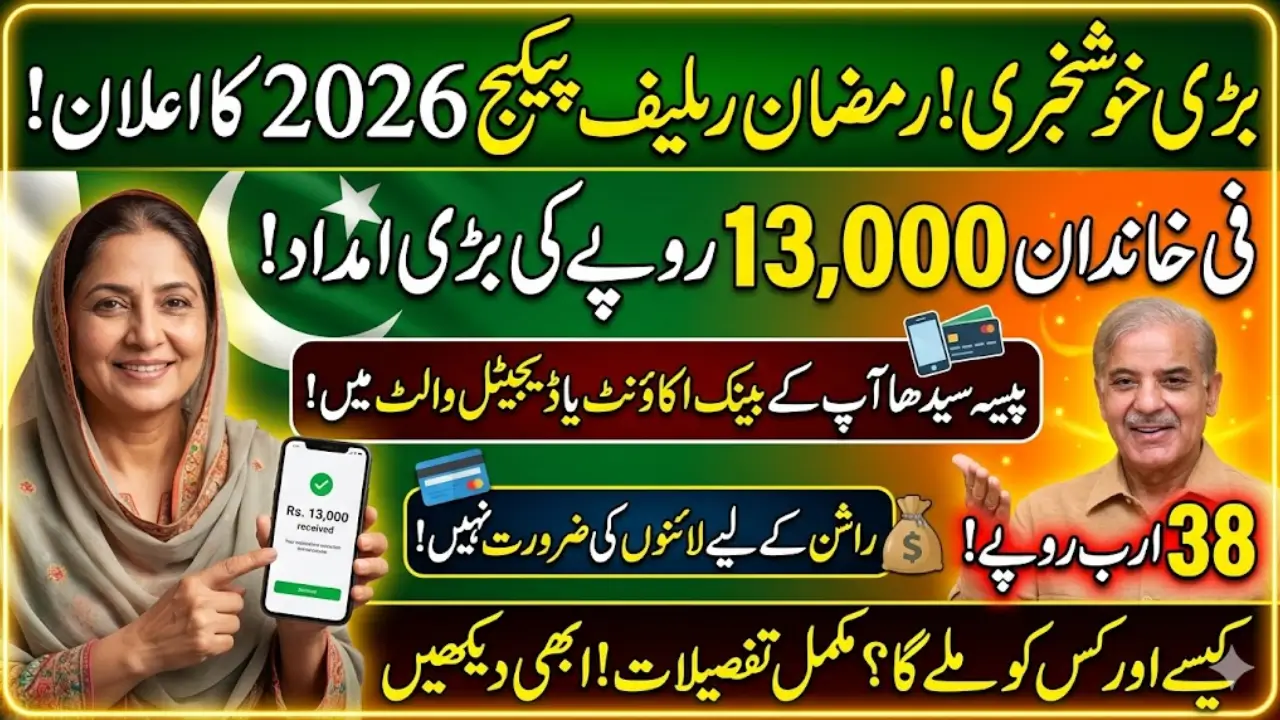
The Government of Pakistan has introduced a major relief initiative to support low-income families during the holy month of Ramadan. Prime Minister Shehbaz Sharif recently announced the Ramazan Relief Package 2026, allocating Rs. 38 billion to provide financial assistance to deserving households across the country.
This program aims to reduce the financial burden on families facing rising inflation and increasing food prices. Instead of distributing ration through traditional stores, the government has introduced a modern digital payment system so beneficiaries can receive funds directly and manage their household expenses according to their needs. Prime Minister Shehbaz Sharif on Saturday
Key Highlights of the Ramazan Relief Package
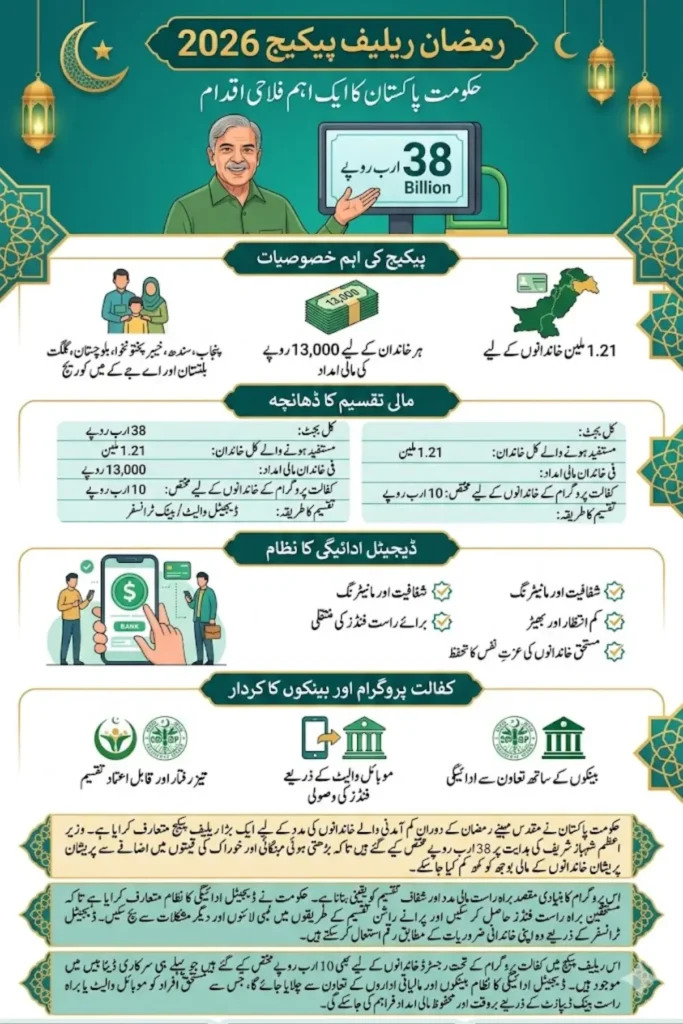
The Ramazan Relief Package 2026 focuses on direct financial assistance and transparent distribution. The government has designed the program to help millions of deserving households during Ramadan.
Important features of the package include:
- Total relief package worth Rs. 38 billion
- Financial assistance for 1.21 million deserving families
- Each eligible household will receive Rs. 13,000
- Funds will be transferred through digital wallets or bank accounts
- Coverage includes Punjab, Sindh, Khyber Pakhtunkhwa, Balochistan, Gilgit-Baltistan, and AJK
- A portion of the budget reserved for families already registered in government welfare programs
This initiative reflects the government’s effort to modernize welfare distribution while ensuring that support reaches those who need it most.
You can also read: Hukumat Pakistan Relief Package
Financial Distribution Structure
The government has allocated funds carefully to ensure fair distribution among beneficiaries. A significant share of the budget is reserved for households already registered in existing welfare programs.
Below is a simple overview of the financial structure of the Ramazan Relief Package 2026:
| Category | Details |
|---|---|
| Total Budget | Rs. 38 Billion |
| Total Beneficiary Families | 1.21 Million |
| Financial Assistance per Family | Rs. 13,000 |
| Allocation for Kafalat Program Families | Rs. 10 Billion |
| Distribution Method | Digital Wallet / Bank Transfer |
This financial model allows the government to deliver funds quickly and efficiently while reducing administrative costs.
Digital Payment System for Transparent Distribution
One of the most significant changes in the Ramazan Relief Package 2026 is the introduction of a digital payment system. Previously, relief packages were distributed through utility stores where beneficiaries had to wait in long queues to receive ration items.
The new system eliminates many of these challenges by sending financial support directly to eligible families. Through digital transfers, beneficiaries can withdraw or use the money according to their household needs.
Key advantages of the digital system include:
- Direct financial transfer to beneficiaries
- Reduced waiting time and overcrowding
- Better transparency and monitoring
- Protection of the dignity of deserving families
- Lower chances of corruption or mismanagement
This modern approach allows the government to deliver relief faster while maintaining accountability.
Role of Banks and Financial Institutions
To ensure smooth implementation, the government has coordinated with banks and financial institutions. The State Bank of Pakistan has developed a framework to support digital payments and ensure secure financial transactions.
The digital payment system allows beneficiaries to receive funds through mobile wallets or direct bank deposits. This method helps ensure that financial assistance reaches the correct individuals without delays or middlemen.
The banking system will support the relief program by:
- Facilitating digital wallet payments
- Managing direct bank transfers
- Monitoring transactions for transparency
- Providing secure financial infrastructure
- Ensuring quick and reliable disbursement
Through collaboration with financial institutions, the government aims to create a more efficient welfare distribution system.
Allocation for Kafalat Program Beneficiaries
A portion of the Ramazan Relief Package has been specifically reserved for families already registered under the Kafalat program, which supports low-income households across Pakistan.
Out of the total Rs. 38 billion package, approximately Rs. 10 billion has been allocated for these families. Since they are already verified through existing government databases, the funds can be transferred quickly and efficiently.
Families enrolled in welfare programs may benefit from:
- Faster verification process
- Automatic eligibility checks
- Direct financial transfers
- Secure and transparent payments
- Reduced documentation requirements
This targeted allocation ensures that previously identified vulnerable households receive timely support during Ramadan. Prime Minister Shehbaz Sharif on Saturday
You can also read: Ramzan Nigehban Check Eligibility Through
Challenges in Implementing the Digital Relief System
Although the digital system provides many benefits, the transition from traditional distribution methods presents certain challenges. The government has acknowledged that implementing a nationwide digital relief program requires coordination between multiple institutions.
Some of the key challenges include establishing technical infrastructure, ensuring proper verification of beneficiaries, and improving access to banking services in remote areas.
The government is working to address the following issues:
- Coordination between banks and government agencies
- Expansion of digital payment systems
- Awareness among beneficiaries about digital wallets
- Technical support for financial transfers
- Monitoring the overall distribution process
By addressing these challenges, the government aims to ensure the program operates smoothly and reaches all eligible families.
Government Monitoring and Review Mechanism
To maintain transparency and accountability, the government plans to regularly review the progress of the Ramazan Relief Package. Monitoring systems will track how funds are distributed and ensure that assistance reaches the intended beneficiaries.
Authorities will evaluate the effectiveness of the digital system and identify areas for improvement. Continuous monitoring will help improve future relief programs and strengthen public welfare initiatives.
The review process may include:
- Periodic progress reports
- Digital tracking of fund transfers
- Evaluation of beneficiary feedback
- Coordination with financial institutions
- Policy adjustments if necessary
This oversight helps ensure that public funds are used effectively to support those who need assistance the most.
Conclusion
The Ramazan Relief Package 2026 represents a significant step toward improving social welfare support in Pakistan. With a Rs. 38 billion allocation, the government aims to assist over 1.21 million deserving families during the holy month of Ramadan.
You can also read: Nighaban Card Distribution Launch Check
By introducing digital payments, bank transfers, and transparent monitoring systems, the program seeks to replace outdated distribution methods and ensure dignity for beneficiaries. The new system allows families to receive financial assistance directly and manage their household needs more effectively. Prime Minister Shehbaz Sharif on Saturday