

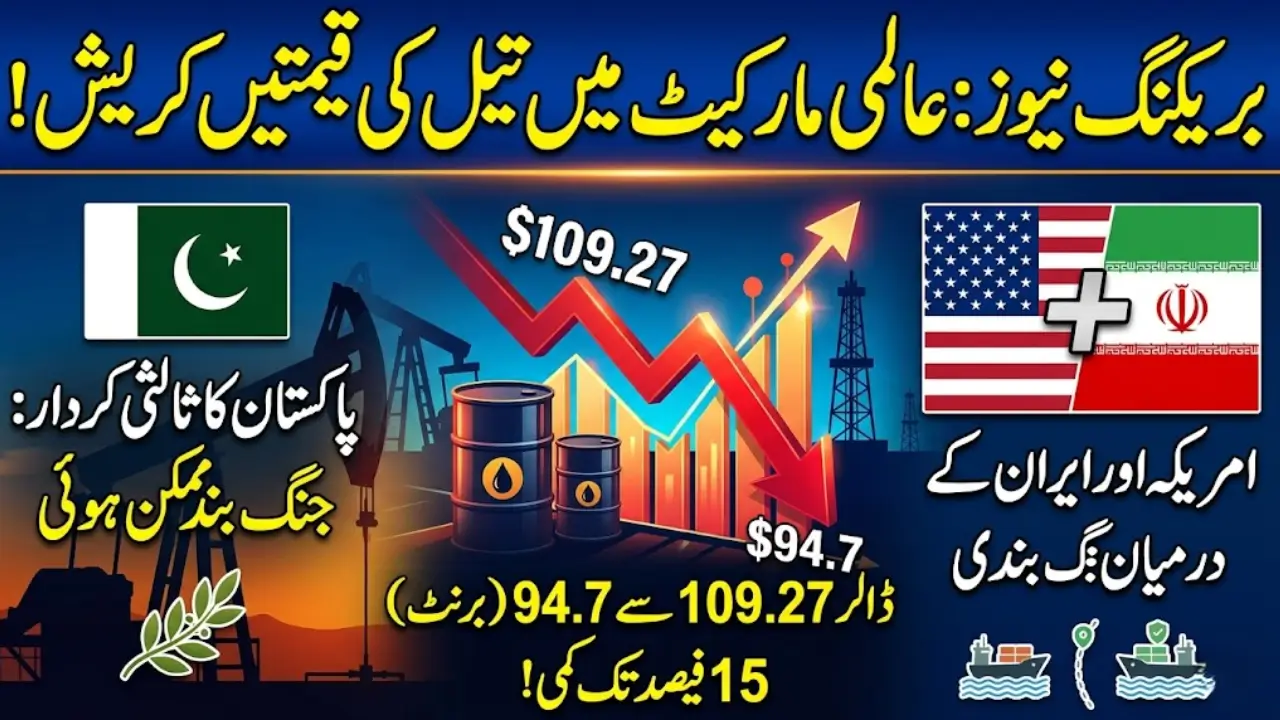
Global oil markets experienced a dramatic shift as prices dropped sharply following a temporary ceasefire agreement between the United States and Iran. The unexpected diplomatic breakthrough, reportedly facilitated by Pakistan, calmed fears of prolonged conflict in a region critical to global energy supply. As a result, investors reacted quickly, triggering a steep sell-off in crude oil.

This development has major implications not only for energy markets but also for global economies, inflation trends, and geopolitical stability. The ceasefire, even though temporary, signals a possible turning point that traders had not anticipated.
Oil Prices See Sharp Decline
Oil prices recorded one of their steepest single-day declines in recent months. The drop reflects reduced concerns over supply disruptions, particularly in key shipping routes like the Strait of Hormuz.
- Brent crude fell nearly 16%, dropping from $109.27 to around $91.72 per barrel
- At the time of reporting, Brent stabilized slightly at $94.7, still down over 13%
- West Texas Intermediate (WTI) also declined by approximately 15%, trading near $95 per barrel
This rapid decline shows how sensitive oil markets are to geopolitical developments, especially in the Middle East. Even a short-term ceasefire can significantly impact investor sentiment and pricing.
You can also read: Punjab Government Issues Notification
Role of Pakistan in Diplomatic Breakthrough
Pakistan played a crucial mediating role in bringing both nations to the negotiation table. The country’s diplomatic efforts helped ease tensions and paved the way for a two-week ceasefire agreement.
The mediation reflects Pakistan’s growing importance in regional diplomacy. By facilitating dialogue between two long-standing adversaries, it contributed to a temporary pause in hostilities that had threatened global stability.
- Helped initiate communication between Washington and Tehran
- Encouraged confidence-building measures from both sides
- Positioned itself as a neutral and effective mediator
This involvement not only boosts Pakistan’s diplomatic profile but also highlights the importance of third-party mediation in global conflicts.
Impact of Strait of Hormuz Stability
One of the biggest reasons behind the oil price crash is Iran’s decision to allow safe maritime passage through the Strait of Hormuz. This waterway is one of the most critical oil transit routes in the world.
The assurance of uninterrupted shipping significantly reduced fears of supply disruptions, which had previously driven prices higher.
- Around 20% of global oil passes through this route
- Any blockage or threat can cause immediate price spikes
- Iran’s commitment restored market confidence
This move alone played a major role in stabilizing global supply expectations, leading to the sharp drop in oil prices.
Statements from Leadership
Both countries confirmed the ceasefire publicly, signaling a coordinated effort to reduce tensions. The announcement from leadership added credibility to the agreement and reassured markets.
The United States confirmed it would pause military operations, while Iran emphasized its commitment to maintaining safe shipping routes during the ceasefire period.
- The ceasefire is described as “double-sided”
- Military actions will be suspended for two weeks
- Both sides indicated progress toward a broader agreement
These statements suggest that the ceasefire is not just symbolic but part of a larger diplomatic effort toward long-term peace.
Market Reaction and Investor Behavior
The oil market reacted instantly to the news, reflecting how quickly traders adjust to geopolitical developments. Investors who had previously bet on rising prices due to conflict began selling off positions.
This reaction highlights the role of uncertainty in driving commodity prices. When risks decrease, markets often correct sharply.
- Traders reduced risk exposure
- Energy stocks also saw fluctuations
- Safe-haven assets gained attention
Such movements are common during geopolitical shifts, especially when the news is unexpected.
You can also read: NADRA introduces new Method for Children’s Form B
Key Oil Price Changes Table
| Oil Benchmark | Previous Price | Lowest Price | Current Price | Percentage Drop |
|---|---|---|---|---|
| Brent Crude | $109.27 | $91.72 | $94.7 | ~13–16% |
| West Texas Intermediate | ~$112 (est.) | ~$95 | $95 | ~15% |
This table clearly shows the extent of the decline and how both major benchmarks reacted similarly to the ceasefire news.
What This Means for the Global Economy
Lower oil prices can have wide-ranging effects on economies around the world. For oil-importing countries, this is generally positive, as it reduces energy costs and inflationary pressure.
However, for oil-exporting nations, the drop may impact revenues and economic stability. The long-term effects will depend on whether the ceasefire leads to a permanent agreement.
- Reduced fuel costs for consumers
- Potential easing of inflation globally
- Lower revenues for oil-dependent economies
- Increased economic stability if peace continues
The situation remains fluid, and markets will continue to monitor developments closely. Oil Prices Likely to Drop 15% After US-Iran Ceasefire
Conclusion
The 15% drop in oil prices reflects how powerful geopolitical developments can be in shaping global markets. While the ceasefire between the United States and Iran is temporary, it has already delivered significant economic impact.
You can also read: Benazir Income Support Program by Rs. 5,000
The coming weeks will be crucial. If both sides move toward a permanent agreement, oil prices may stabilize at lower levels. However, any breakdown in talks could quickly reverse the trend.
For now, the ceasefire offers a moment of relief for global markets and a reminder of how diplomacy can influence economic outcomes. Oil Prices Likely to Drop 15% After US-Iran Ceasefire