

Pakistan’s federal government has signaled relief for citizens by announcing a potential reduction in petroleum prices once the ongoing Iran-US crisis stabilizes. The assurance came during a high-level meeting of the ruling coalition, where economic challenges and energy concerns were thoroughly reviewed.
The session, chaired by Khawaja Asif, reflected growing concerns about global instability and its ripple effects on Pakistan’s economy. Leaders expressed confidence in current policies while acknowledging that the international situation has created pressure on fuel prices and economic stability.
Impact of Iran-US Conflict on Global and Local Economy
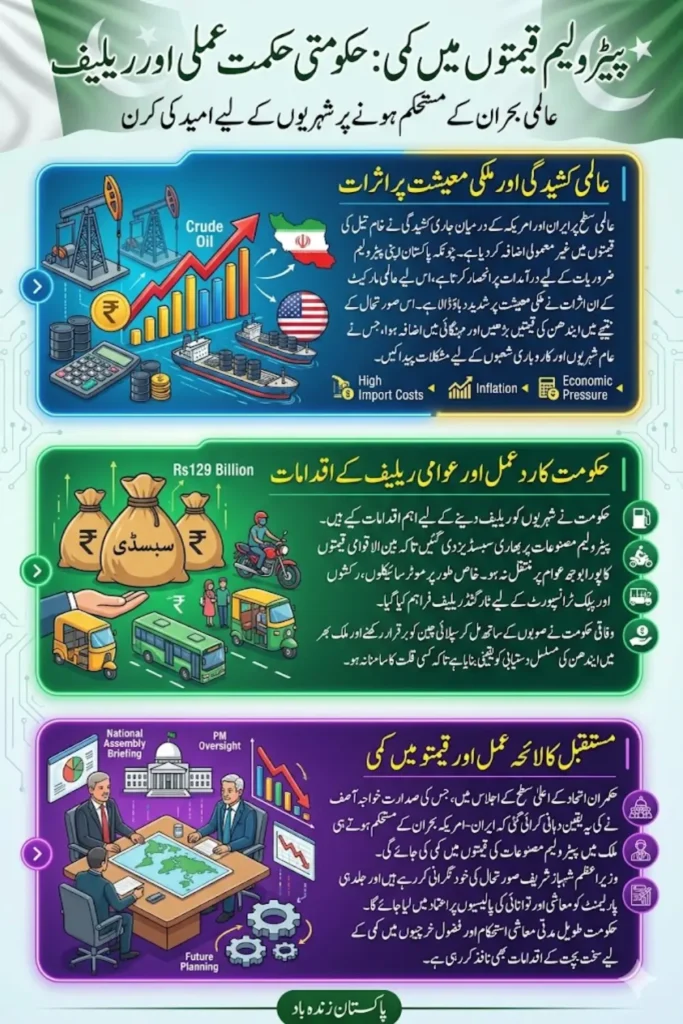
The conflict involving Iran, the United States, and regional tensions has significantly disrupted global oil markets. Pakistan, being an oil-importing country, has felt the direct consequences in the form of rising fuel costs and economic strain.
Muhammad Aurangzeb highlighted how the global oil crisis has intensified due to geopolitical tensions. This situation has not only affected Pakistan but also created financial pressure worldwide.
- Oil prices surged due to supply chain uncertainty
- Import costs increased, impacting foreign reserves
- Inflation risks grew due to higher transportation costs
- Developing countries like Pakistan faced stronger economic shocks
The government emphasized that despite these challenges, proactive steps have helped Pakistan remain relatively stable compared to other nations.
You can also read: Maryam Nawaz Petrol Subsidy Rs 2000
Government’s Relief Measures and Subsidy Plans
To protect citizens from rising fuel prices, the government introduced significant subsidies. These measures were designed to reduce the burden on daily commuters and transport sectors.
According to officials, the government initially provided a subsidy of Rs129 billion to avoid passing the full impact of price hikes onto the public. Additional targeted subsidies were also introduced to support vulnerable sectors.
- Subsidies for motorcycles and rickshaws
- Relief for public transport systems
- Support for freight and logistics vehicles
- Provincial contributions to petroleum subsidies
These steps reflect a coordinated effort between federal and provincial governments to manage the crisis effectively while maintaining economic balance.
Ensuring Petroleum Supply and Market Stability
Ali Pervaiz Malik briefed the meeting on the country’s petroleum supply situation, ensuring that no shortages would occur despite global disruptions.
The government has taken immediate and strategic actions to maintain uninterrupted fuel availability across Pakistan. Shehbaz Sharif is personally overseeing the situation, ensuring timely decisions and coordination among departments.
- Continuous monitoring of fuel demand and supply
- Emergency response plans for shortages
- Strategic reserves management
- Coordination with international suppliers
These measures aim to prevent panic in the market and maintain public confidence during uncertain times. Petrol Prices to be Reduced Once Iran-US Crisis Normalises
Parliament to Be Taken into Confidence
One of the key outcomes of the meeting was the decision to formally brief the National Assembly. This step is intended to ensure transparency and build political consensus on economic and energy policies.
Government leaders agreed that open communication with parliament is essential in times of crisis. The Prime Minister is expected to address the assembly and share detailed insights into the situation.
- Full briefing on economic challenges
- Explanation of policy decisions
- Discussion on future strategies
- Efforts to build political unity
This move highlights the government’s commitment to inclusive decision-making and democratic accountability.
Economic Strategy and Austerity Measures
The government also discussed broader economic strategies to handle the crisis. Austerity measures are being implemented to reduce unnecessary expenditures and manage financial resources efficiently.
These steps are crucial to maintaining fiscal discipline while supporting citizens during difficult times.
- Reduction in non-essential government spending
- Improved financial management practices
- Focus on sustainable economic policies
- Long-term planning to reduce dependency on imports
Officials stressed that tough decisions are necessary to navigate the current global economic environment.
You can also read: Khyber Pakhtunkhwa Government launched
Petroleum Pricing Outlook
| Factor | Current Situation | Expected Outcome |
|---|---|---|
| Global Oil Prices | High due to geopolitical tensions | Likely to decrease after stability returns |
| Government Subsidies | Active and supporting consumers | May adjust based on fiscal capacity |
| Local Fuel Prices | Controlled through policy interventions | Expected reduction in near future |
| Supply Chain | Stable with government monitoring | Continued stability expected |
Conclusion
The government’s announcement of potential petrol price reductions offers hope to citizens struggling with rising living costs. However, this relief largely depends on the normalization of the Iran-US crisis and global oil market stability.
You can also read: Maryam Ko Batain Petrol Subsidy Rs 100 Per Liter Bachat
While Pakistan has managed the situation with strategic planning and subsidies, the coming weeks will be crucial. Continued government vigilance, transparent communication, and coordinated economic policies will play a key role in ensuring long-term stability and public relief. Petrol Prices to be Reduced Once Iran-US Crisis Normalises